
A Game of Thrones: Board Game
Twin Sails InteractiveBoard
3.360.00 Reviews
- Version
- 1.1.3
- Installs
- 10.00K
- Age Rating
- Everyone 10+
Screenshots
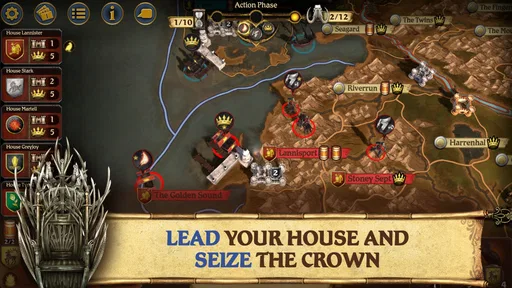
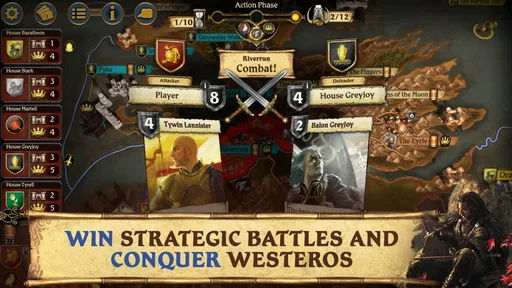
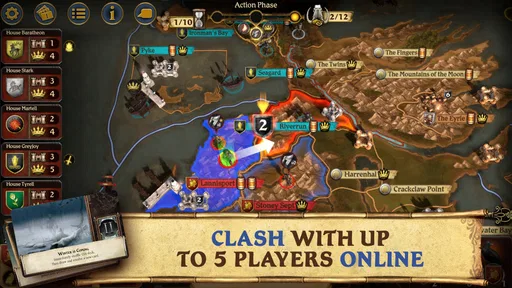
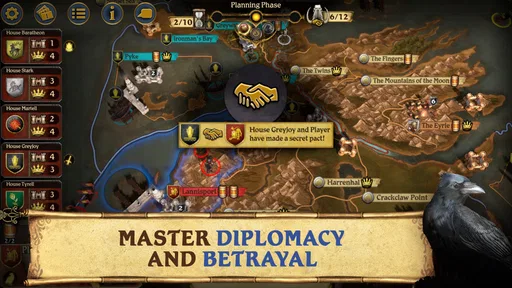
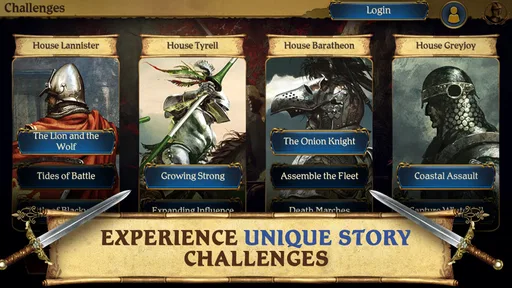
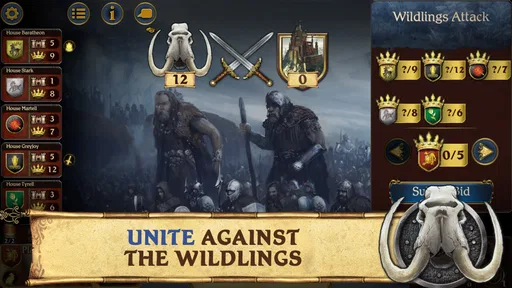
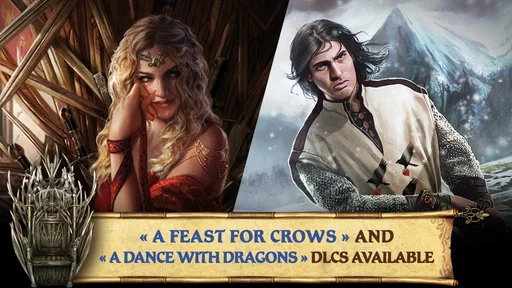
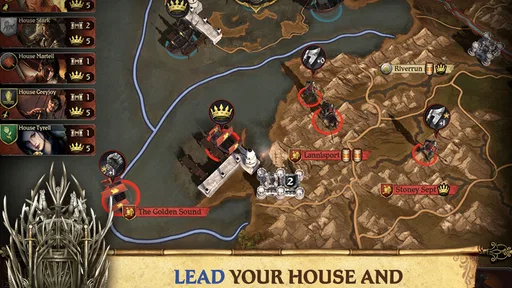
Our Review of A Game of Thrones: Board Game
 Analysis by Appyee
I went into A Game of Thrones: Board Game expecting a digital version of a familiar tabletop battle, but what stayed with me was not the fighting alone. The interesting part is the sequence around it: I choose an action, watch the table react, gain or lose influence, then decide whether the new situation deserves another risky move. That loop makes every turn feel political as well as tactical.
This is a paid board game from Twin Sails Interactive, priced at $8.99, with optional in-app items priced at $4.49 each. It is aimed at players aged 10 and over, runs on Android starting with version 7.0, and its current version is 1.1.3. The game has reached over 10 thousand installs and holds a 3.3 average from 456 ratings, which feels consistent with my experience: there is a strong strategy game here, but it asks more patience and concentration than a casual mobile title.
Why the first decision matters more than the first battle
The opening move is rarely about attacking the nearest opponent. I have to think about what my House needs several turns from now, while also guessing what the other Houses are preparing. That makes the first action feel like a commitment rather than a button press. A defensive choice may protect a useful position, but it can also announce that I am worried. An aggressive choice may create momentum, yet leave another border exposed.
The setting helps because the conflict is not presented as a simple race to remove everyone else. The goal is tied to control, influence and timing, so a player can be winning one kind of exchange while quietly falling behind in another. I found myself watching the wider board more than the individual clash. A small loss in one area can be acceptable if it buys time elsewhere, while a flashy victory can be harmful if it spends resources or attention that the next round requires.
That is the first useful lesson for new players: do not treat every available action as an invitation to use it immediately. In my early sessions, I often reacted to the most visible threat and gave up the chance to shape the next turn. A better approach is to identify one priority, such as holding a key area or preserving a strong position, and judge every action against it. This reduces the feeling of being pulled around by the board.
The digital format makes this opening easier to manage than a physical table in some ways. The game keeps the board state visible and handles the routine parts of a turn, allowing me to focus on choices instead of checking every piece manually. At the same time, the screen can make a complicated position feel more compressed. I sometimes needed to pause and inspect the board before committing, especially when several Houses had reasons to interfere with the same location.
This is not a game I would recommend to someone looking for an instant match during a short break. The first action has consequences that may only become clear much later. If I start while distracted, I tend to make a move that seems reasonable in isolation and then spend the rest of the session repairing it. Players who enjoy planning several steps ahead will appreciate that weight; players who want a quick, forgiving board game may find it tiring.
Reading the board before choosing a side
One of the more useful habits I developed was to inspect the relationships between positions before deciding where to commit. A location that looks valuable may be difficult to defend, while a less obvious position can provide the stability needed to support a later push. The best action is often the one that improves two things at once: it protects a route while limiting another House, or it creates pressure without forcing an immediate battle.
This also changes how I think about betrayal. Turning against another House can be powerful, but it is not automatically clever. If I break an arrangement too early, I may gain a short-term advantage and give the remaining players a reason to coordinate against me. The game rewards timing more than constant hostility. I have had better results by allowing an opponent to feel safe for one more turn when that made my eventual move harder to answer.
The practical trade-off is clear. Careful play creates stronger positions, but it takes longer to reach the satisfying moment when everything comes together. Fast play produces more drama, yet it can leave the board in a state that is difficult to recover from. That tension is central to the experience and is one reason the game feels closer to a serious strategy board game than to a lightweight mobile adaptation.
The feedback rhythm: action, consequence and pressure
After each action, the game gives me a new problem rather than a simple reward. A successful move may open a route, change the balance around a contested area or force another House to reveal its priorities. A failed move is not always wasted either; it can show me which opponent is prepared, which position is more fragile than expected, or which plan was too obvious.
I like this feedback rhythm because it keeps the match moving even when I am not winning battles. The board is constantly answering my decisions. If I strengthen one front, pressure appears somewhere else. If I wait, another player may take the initiative. The result is a steady exchange between intention and correction: I make a plan, the board disrupts it, and I decide whether to adapt or continue anyway.
The rhythm is less satisfying when I want immediate clarity. Some consequences are delayed, and the game expects me to remember why a position became dangerous. That can create a learning curve during the first few sessions. I recommend taking a moment after each major change to ask three questions: what did I gain, what became vulnerable, and who benefited from my move? This simple check helped me avoid treating a local success as a complete victory.
Another important point is that the game’s tension comes from uncertainty between players, not from a constant stream of visual spectacle. The pleasure is in recognizing a pattern before it becomes obvious. I may notice that one House is quietly accumulating options, or that a supposed attack is really a way to distract me from another objective. That kind of feedback rewards attention, and it makes repeated sessions more interesting for people who enjoy reading intentions.
It also means the game works best when I can give it uninterrupted attention. Playing while multitasking makes the board feel unfair because I miss the small signals that explain why the situation changed. The game is not necessarily punishing me with random surprises; often I simply failed to track the incentives of the other Houses. That distinction matters, because the frustration is usually fixable through better observation rather than better reflexes.
What to do when a plan starts collapsing
My most useful adjustment has been to stop defending a plan merely because I already invested in it. If an opponent has made a position too expensive to maintain, I now look for the best retreat or diversion instead of spending another turn trying to restore the original idea. This is especially important in a game where several players can profit from my stubbornness.
A second tactic is to separate visible pressure from real commitment. Sometimes I can make an opponent respond without putting my whole position at risk. That creates room to learn what they value. Other times, a threatening action only tells everyone that I have no alternative. The difference is whether I still have a useful follow-up if the first move is answered.
These are not shortcuts that remove the need to understand the rules. They are ways to turn the feedback loop into information. The game becomes more enjoyable once I stop asking whether an action was simply good or bad and start asking what it taught me about the next decision.
The reward is control, not just conquest
The strongest reward in this game is the feeling that I have made the board narrower for everyone else. I do not need to dominate every area to feel ahead. Sometimes the reward is securing one important advantage, forcing a rival to spend a turn responding, or creating two credible threats so that one of them survives.
That kind of reward is more satisfying to me than a straightforward victory animation because it reflects the choices that led there. When a plan works, I can usually trace it back through several earlier decisions: a position I preserved, a battle I avoided, or a moment when I allowed another House to overextend. The game gives value to preparation, and that makes a successful turn feel earned.
There is also a social reward in understanding how the other players think. Even when I lose, I can come away with a clearer sense of why a rival’s strategy worked. That makes the game suitable for a small group of friends who enjoy discussing decisions afterward. It is less suitable for people who need every loss to feel immediately explainable or who dislike being outmaneuvered by a plan that developed quietly.
The reward system has a downside: progress can feel slow if I measure success only by the final result. A session may contain several excellent decisions and still end badly because the board shifted at the wrong moment. I had to learn to value improved judgment as part of the reward. Once I did, losing became less discouraging, especially when I could identify the turn where I chose a narrow advantage over a safer long-term position.
For new players, I suggest choosing one learning goal per session. In one game, I might focus on keeping my borders manageable. In another, I might practice delaying a betrayal until it creates a clear advantage. This makes the experience more useful than trying to master every House and every interaction immediately. It also gives the reset between sessions a purpose, which is important because the game does not become easier simply through repetition.
Who gets the most from the reward loop
This is a good fit for fans of strategic board games who enjoy negotiation, calculated risk and indirect victories. It is also appealing to players who like the political atmosphere associated with the Iron Throne, provided they are willing to engage with the decisions rather than expecting a purely narrative experience.
I would be more cautious recommending it to someone who wants a solo-friendly time filler, a fast card battler or a simple family game. The age guidance of Everyone 10+ makes it broadly accessible, but the strategic demands are more serious than that label might suggest. Younger players can understand the theme and actions, yet may need time to see why an apparently generous move can be dangerous several turns later.
The price also changes the decision. At $8.99, I would want to know that I enjoy deliberate board-game sessions before buying. Optional items cost $4.49 per item, so I would treat those as a separate consideration rather than assuming the initial purchase covers every possible extra. For me, the core value depends on replaying the strategic loop, not on collecting additional content.
Why the session reset makes another game tempting
When a session ends, I usually know exactly which decision I want to revisit. That is a strong sign that the reset works. I am not restarting because the game has given me a meaningless result; I am restarting because the board exposed a weakness in my thinking. The next session becomes an experiment: what happens if I protect that border earlier, wait before committing, or refuse the tempting attack?
The reset is also important because the game’s central loop is not about building a permanent character or accumulating power across unrelated matches. The satisfaction comes from entering a new political situation and applying what I learned. That makes it easier to return after a loss, although it can be less appealing to players who prefer persistent upgrades and visible long-term progression.
I found that a short break between sessions improves the experience. Immediately replaying after a frustrating defeat can lead me to overcorrect and choose a reckless opening. Waiting long enough to identify the actual mistake helps me carry forward a lesson instead of an emotion. This is one of those small practical differences between enjoying the game and merely grinding through it.
The reset also reveals the game’s replay value. A familiar opening does not guarantee a familiar middle game because the other Houses can make different priorities visible. My own choices alter the pressure as well. If I take a more defensive approach, the contest develops differently than when I fight for the initiative. The replay value therefore comes from interaction and decision order, not from expecting every session to deliver a completely new ruleset.
That said, repetition can expose the game’s demands. If I am not in the mood to analyze, the reset feels like returning to homework. There is no shame in skipping it when I want something lighter. A quick digital board game or an accessible strategy title may be a better alternative for a casual evening, while a physical version may suit players who want face-to-face negotiation and the tactile presence of pieces on a table.
How it compares with familiar alternatives
Compared with a simple digital board game, this one gives me more room to plan but less immediate comfort. A casual alternative is easier to learn, faster to finish and more forgiving when I make a poor move. This game is better when I want decisions to remain meaningful several turns later.
Compared with a real tabletop session, the mobile version is more convenient and handles routine administration for me. I can focus on the board without setting up a physical table. The trade-off is that the screen can make discussion and shared reading of the position feel less natural. Players who love table talk may prefer playing with physical components, while players who want a compact way to revisit the strategy may appreciate the digital format.
Compared with a combat-focused strategy game, the emphasis here is less about maximizing damage and more about deciding when conflict is worthwhile. I cannot judge every turn by how many opposing units disappear. Position, timing and the reactions of other Houses matter just as much. That makes it a better choice for a player who enjoys political maneuvering, but a weaker choice for someone who wants direct tactical battles above all else.
My verdict on the complete loop
My experience with A Game of Thrones: Board Game is defined by a satisfying but demanding cycle. I choose an action, receive a board-level consequence, turn that consequence into an advantage or a lesson, then begin again with a different understanding of the situation. The reward is not constant winning; it is learning how to make the next decision more difficult for everyone else.
Twin Sails Interactive has made a game that respects the strategic character of its source material. It does not reduce the struggle for the Iron Throne to a sequence of uncomplicated attacks. Instead, it asks me to read pressure, manage risk and accept that a good plan may need to change. That makes the game feel distinctive within the board category.
The limitations are equally clear. The learning curve can be uncomfortable, the feedback is not always immediate, and a distracted player can lose track of why the board turned against them. The 3.3 average rating from 456 ratings suggests a divided response, and I understand why: this is a specialized experience rather than a universally easy recommendation. Its 10 thousand-plus installs show that it has found an audience, but popularity alone does not change the need for patience.
I would recommend it to you if you already enjoy thoughtful board games, political negotiation and the satisfaction of improving after a painful defeat. I would skip it if you want quick rounds, automatic progress or a game that explains every consequence instantly. For the right player, the $8.99 purchase can support many meaningful sessions, especially when each reset begins with a specific lesson to test.
The best reason to return is simple: every new session gives me another chance to turn one bad decision into a better opening. That is where the game’s action, feedback, reward and reset come together, and it is why I kept wanting to see what would happen if I played the board more patiently the next time.
Verdict
Strengths of A Game of Thrones: Board Game
- Faithfully captures the political tension and alliances of Westeros.
- Asymmetric houses give each faction a distinct strategic identity.
- Multiple victory paths keep matches varied and replayable.
- Diplomacy and negotiation add depth beyond standard board-game combat.
- Strong artwork and thematic details enhance the Game of Thrones atmosphere.
Limitations of A Game of Thrones: Board Game
- Matches can take a long time, especially with several players.
- Rules and faction abilities may overwhelm newcomers at first.
- Player elimination can leave someone with little to do before the end.
- Negotiations may favor experienced players who know the game well.
- The game is best with a full group, limiting its appeal for solo players.
Other Releases by Twin Sails Interactive
View All


Similar Picks in This Category
View All
Ludo King®
Gametion4.1

Ludo
Yarsa Games4.6

Tile Master® - Matching Game
Higgs Studio3.6

Checkers Online
CC Games4.6

Dominoes
Loop Games4.7

Chess
Chess Prince4.6
Frequently Asked Questions
What is A Game of Thrones: Board Game?
A Game of Thrones: Board Game is a digital adaptation of the strategy board game inspired by George R. R. Martin’s A Song of Ice and Fire universe. Players control powerful Westerosi houses, compete for territory, manage armies, negotiate alliances, and resolve conflicts through tactical battles. The objective is usually to control enough castles and strongholds before opponents can achieve the same goal.
How does the gameplay work?
The game combines area control, diplomacy, resource management, and simultaneous order planning. Each round, players secretly assign commands to their units, then reveal those orders and resolve movement, support, raids, and battles. Decisions are rarely isolated, because an attack can affect future alliances and leave another region vulnerable. Understanding timing, positioning, and your opponents’ intentions is essential for success.
Can I play A Game of Thrones: Board Game alone or with friends?
The experience is primarily designed for multiplayer competition, making it most enjoyable with friends or other strategy fans. Depending on the version and available modes, you may be able to play against computer-controlled opponents, but the strongest part of the game is its negotiation and betrayal system. Before downloading, check the current edition to confirm online, local, or solo options.
Is the game suitable for beginners?
A Game of Thrones: Board Game can be challenging for newcomers because it includes several interconnected systems, including hidden orders, combat strength, special cards, influence tracks, and diplomacy. The interface may take time to understand, especially during the first few rounds. Beginners should expect a learning period, read the tutorial carefully, and start with a lower-pressure match to learn the flow.
Does the game require an internet connection or in-app purchases?
Requirements depend on the specific Android or iOS edition available in your region. Some versions may support offline play against artificial intelligence, while online multiplayer naturally requires a stable internet connection. You should also review the store listing for pricing, advertisements, downloadable content, and in-app purchases. Checking these details before installation helps avoid unexpected costs or compatibility issues.
Play our best games!


